What GSM actually tells you
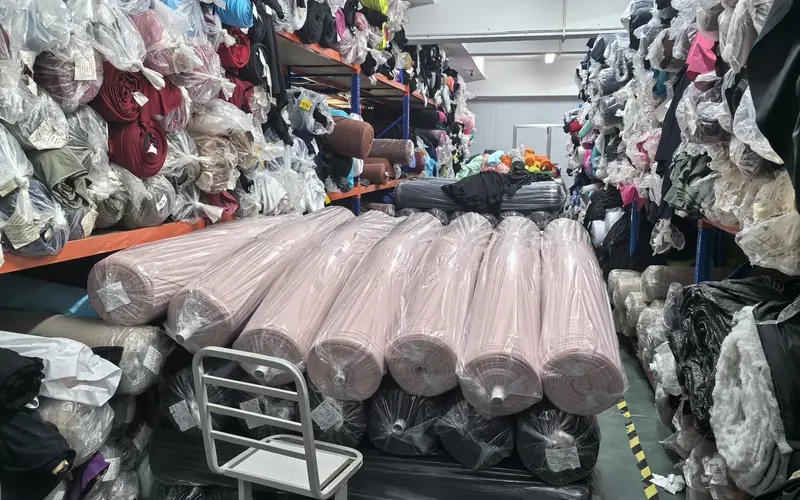
GSM means grams per square metre. It describes the weight of the fabric, which in turn hints at body, opacity, compression and warmth. It does not describe the knit, the stretch or how the fabric performs in the riding position.
Two 170 GSM fabrics can feel completely different: one may be a smooth interlock, the other a textured stretch knit. That is why the weight is always read together with the construction and the end use.
The ranges below reflect the styles in the current catalog. A specific build may sit outside them once the fabric is confirmed for your order.
Jerseys: 130–170 GSM
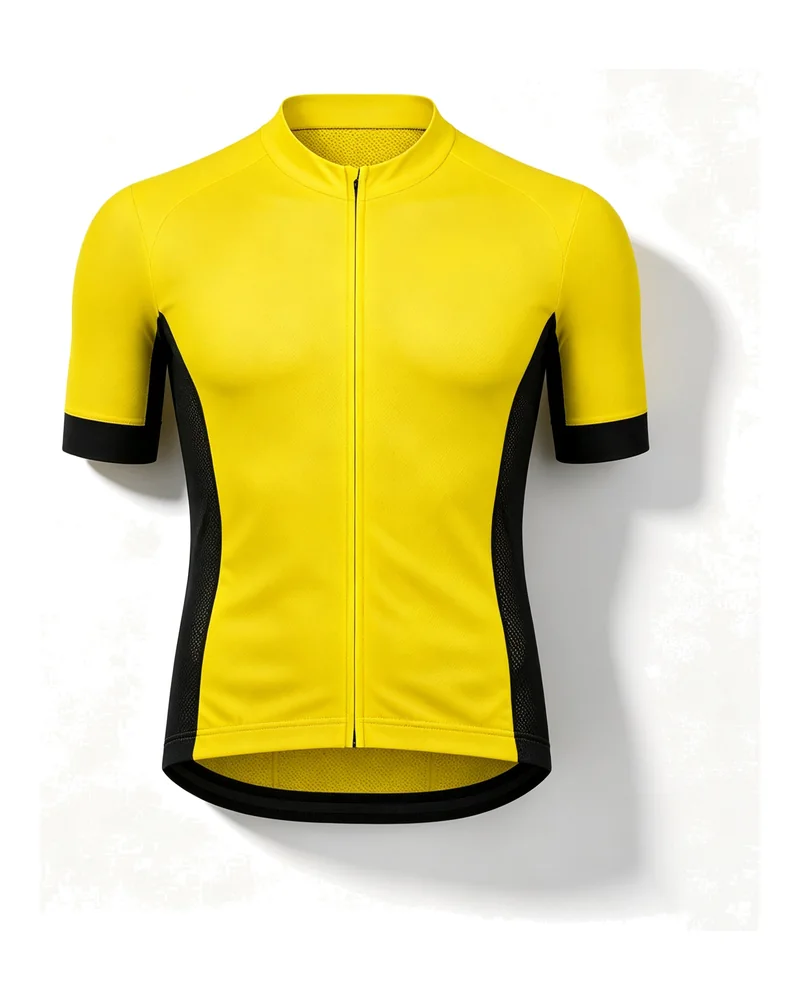
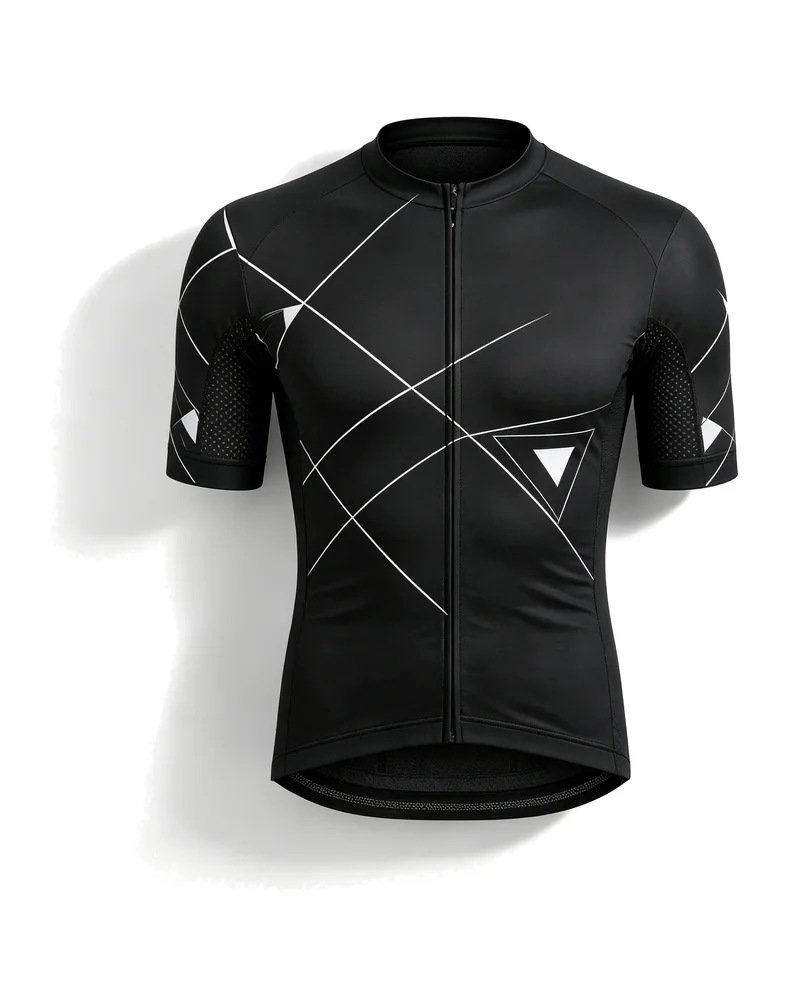
A jersey has to follow the riding position without flapping, carry three loaded rear pockets and stay cool on a climb. That puts the base at 130 to 170 GSM in a polyester-elastane knit.
The lighter end suits race and criterium cuts where the jersey sits close; the heavier end gives a little more structure for club and gravel jerseys with larger printed panels. Mesh side panels and laser-cut cuffs manage heat separately from the base weight.
See the cycling jerseys family for the current builds.
Bib shorts: 200–240 GSM
Bib shorts are the most technical piece in the kit. The fabric has to hold compression through the thigh, keep the pad in place and resist pilling through repeated wash cycles.
At 200 to 240 GSM a compressive knit gives that support. The mesh bib upper is a separate, much lighter knit, so the short's GSM describes the leg panels rather than the whole garment. Pad density and leg length are chosen separately.
See the bib shorts family for the current builds.
Skinsuits: 180–220 GSM
A one-piece skinsuit removes the jersey hem and keeps the back flat in a time-trial position. The aero knit usually sits between jersey and bib short weights at 180 to 220 GSM.
Because the suit is cut as one piece, the panel layout does the work that a separate hem and gripper would do. Stretch direction, seam placement and zip length are agreed on the pattern, then confirmed on the sample.
See the skinsuits family for the current builds.
Jackets and gilets: 90–160 GSM
Outer layers are where the range widens most. A packable rain shell needs to fold into a pocket, so the fabric sits at the light end. A thermal winter jacket carries a brushed back and more structure, so it sits at the top.
Windproof face fabric, taped seams and a three-pocket back all affect how the garment hangs and how it packs. The weight is chosen with those details, not before them.
See the jackets and gilets family, or send the ride conditions with your brief and a weight can be proposed.
How to specify a weight
Send the riding type, the garment, the fit and the decoration with your enquiry. From that, a weight and construction can be proposed and sampled.
If you already have a fabric reference, send the swatch or the exact specification. If you only have a reference garment, send photos and describe how it should feel — compressive, soft, matte, windproof or packable.
The approved swatch becomes the bulk reference for shade, weight and hand-feel. A weight change after approval is a new sample, not a production adjustment.