Dye sublimation
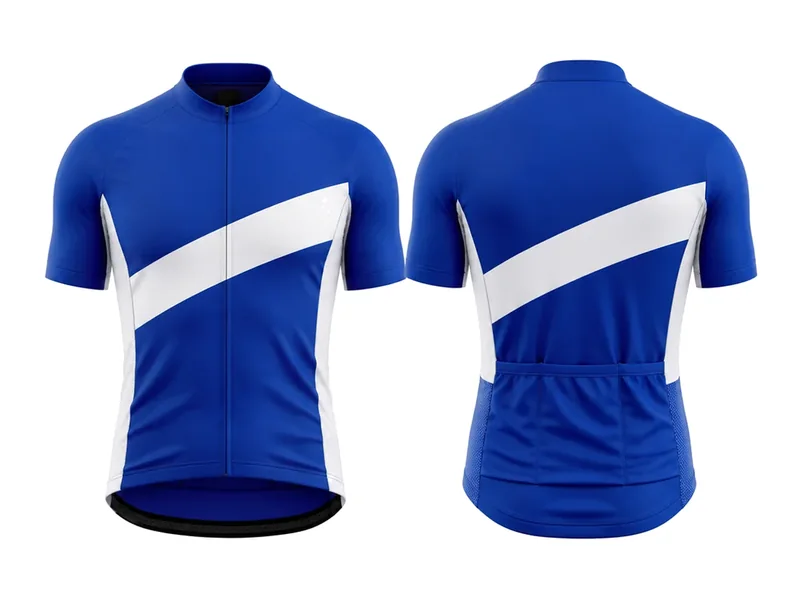
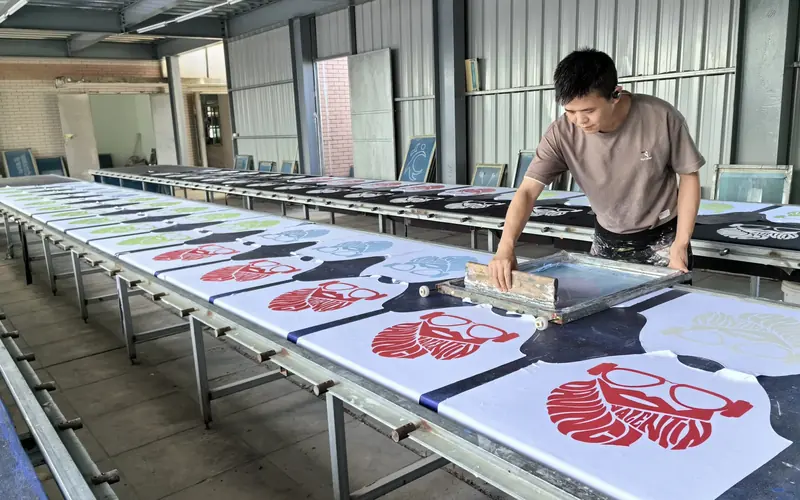
Dye sublimation prints artwork into polyester fabric using heat and pressure. The dye becomes part of the fibre, so the surface stays flat and breathable instead of carrying a printed film.
It is the natural choice for all-over cycling graphics: gradients, camo, geometric panels, sponsor blocks and full-kit designs that run edge to edge. On jerseys, bib shorts and skinsuits, it is the method that allows a complete design without adding weight.
The limits are practical. Sublimation works on polyester, and the final colour depends on the base fabric shade. Very fine detail can soften on textured mesh or a high-stretch knit, so artwork should be tested on the actual substrate before bulk.
Embroidery on stretch panels
Embroidery builds a graphic from thread and stitching. It suits crests, wordmarks and small sponsor marks on a jacket chest or a cap panel where the fabric does not stretch as far as a race jersey.
On a jersey or a skinsuit, embroidery has to be placed with care. Thread and backing add weight and limit stretch, so a dense logo on the chest or sleeve can pucker when the rider is in position. Placement, stitch count and backing are approved on the sample.
Where a raised mark is wanted on a high-stretch panel, a silicone or heat-transfer badge usually behaves better than dense stitching.
Silicone: gripper and badge
Silicone appears twice in cycling kit. As a gripper, it is printed or bonded to the inside of a jersey hem or bib leg opening to stop the garment riding up. As a crest, it is a raised rubberised badge with a clean edge.
As a gripper, the pattern matters: dot, wave and stripe layouts behave differently on the skin and against the fabric. The approved sample defines the pattern, the width and the position on the leg.
As a badge, silicone gives a modern three-dimensional look that suits jackets and retail capsules. Both uses depend on the substrate, so wash testing belongs on the approval sample, not on the bulk order.
Reflective and foil accents
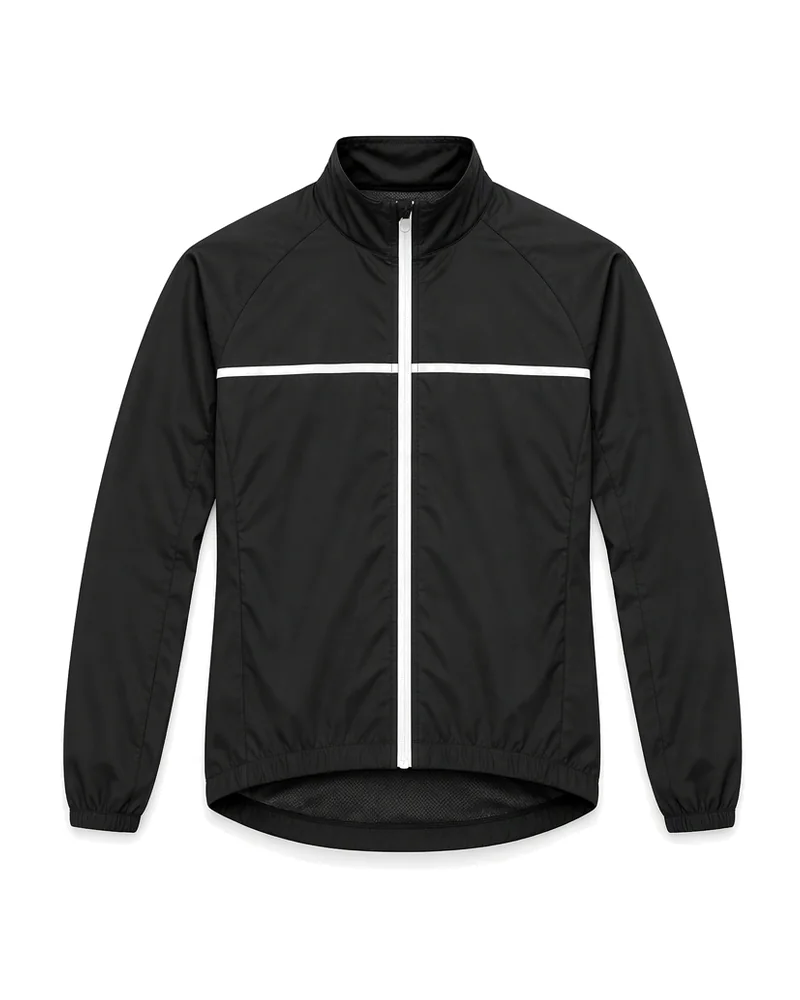
Reflective transfer adds visibility for low-light training and commuting. It reads best as a defined accent — a rear pocket flash, a calf band, a logo on the lower back — rather than as an all-over finish that stiffens the panel.
Foil adds a metallic surface for crests or sponsor marks. It reads best against a matte base: a gold wordmark on a black kit, or a fine foil line on a collar.
Both are applied after the garment is cut, and both depend on the substrate. A textured mesh, a coated windproof face or a stretch panel can change how the bond behaves, so the placement is fixed on the sample.
How to choose per garment
Start with the job the decoration has to do:
- All-over design: dye sublimation.
- Raised crest on a low-stretch panel: embroidery or silicone.
- Garment that must stay put: silicone gripper at hem or leg opening.
- Low-light visibility: reflective transfer accents.
- Metallic sponsor mark: foil.
Then check the fabric. A 130 GSM race jersey, a 220 GSM bib short, an aero skinsuit and a 90 GSM packable gilet all respond differently to heat, stitching and bonding. The approved sample is where the method, placement and colour are fixed for bulk. The capabilities page lists the processes available across the range.